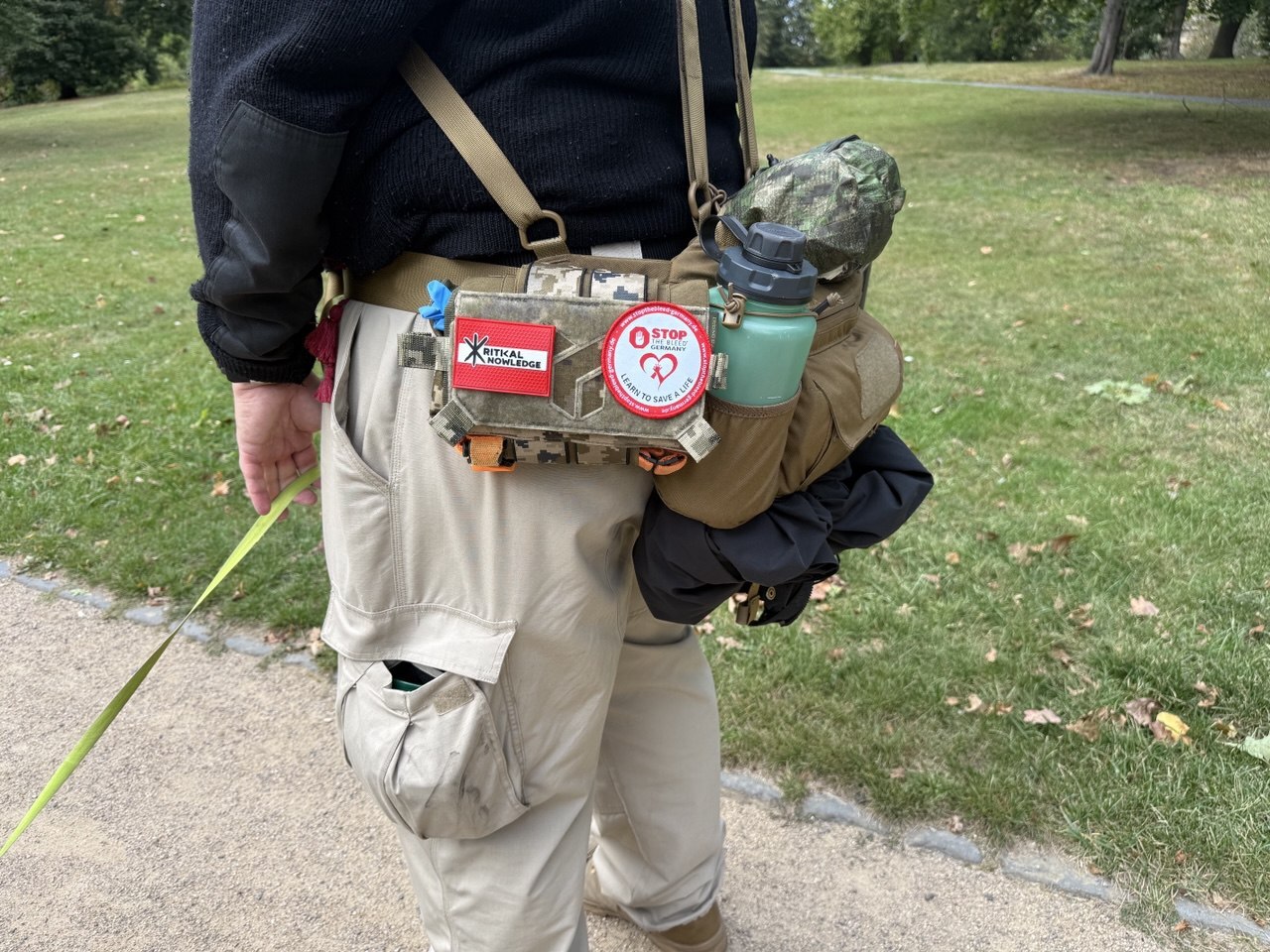
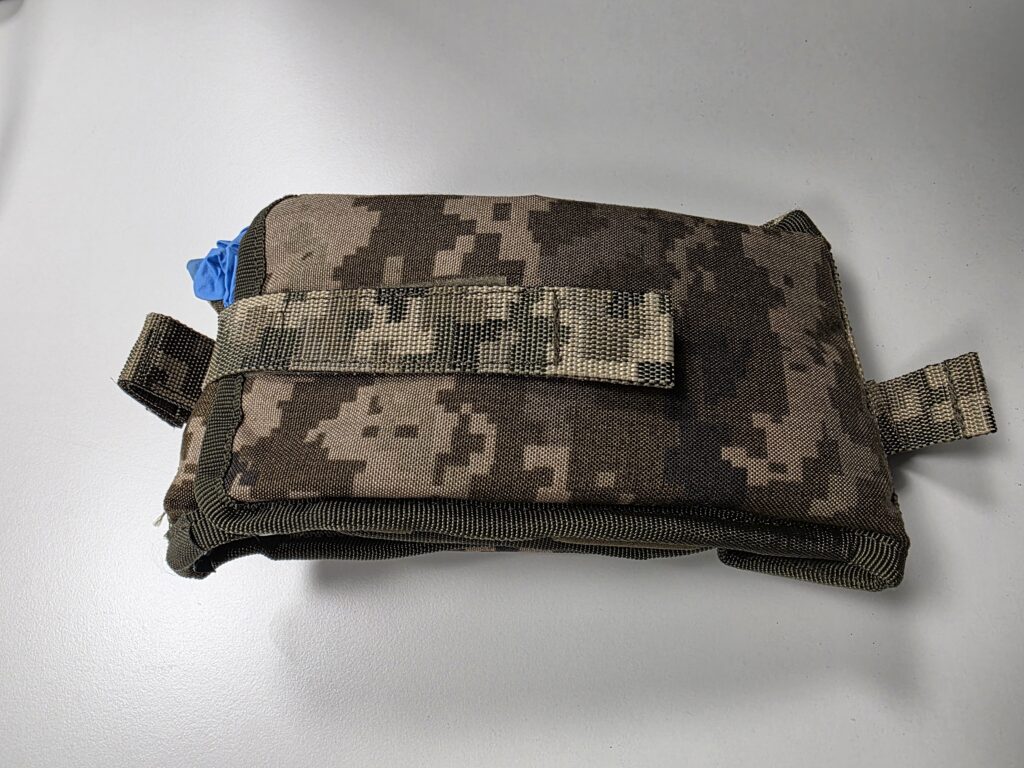
The TQ Dnipro PM27 is a medic pouch made to be carried at the back of your belt for ambidextrous access. It has ample space for live saving equipment while staying small enough to be part of every setup. Especially in combination with combat belts or war belts this small first aid kit really shines.
The design of this pouch is proven and tested in many variants from many manufacturers. But as always, TQ Dnipro brought in a twist or two that let their pouch stand out. The basic design is a PALS mounted, very wide elastic loop. You push a pouch into this loop and let a handle stand out on each side of the loop. When you mount the loop at the center of your back, you can reach back and pull out the pouch with either hand. This setup is usually used for first aid kits because you never know if you still have both hands intact when you reach for it.
Also when you need it, you need it *now* and you usually don’t bother if putting the pouch back is cumbersome. The pouch is small enough for everyone to carry as a personal IFAK. It’s not primarily for specialized medics but for people who need or want to have life saving equipment with them. So it’s perfect for soldiers or sport shooters who need to be prepared. I will later explain why it also works great for everyone who wants to carry a first aid kit, regardless of their job or occupation.
Like all pouches and bags from TQ Dnipro it comes in a lot of different colors. Like black or bright red. For me as a camo collector, it’s excellent to have a variant in Ukrainian MM-14 camo pattern.
What makes the TQ Dnipro PM27 first aid kit special
TQ Dnipro has a very good reputation for their Tourniquets and the rest of their gear lives up to the hype. I guess, this is mostly because the gear is developed and tested in an active warzone! Most of the products got developed during the Russian invasion in Ukraine. But unlike other “battle tested” gear, TQ Dnipro equipment is not just “tough but cheap” – you can really tell that they put a lot thought and innovation into their products. There are always small details which make them special in the best of ways.
How the build is special
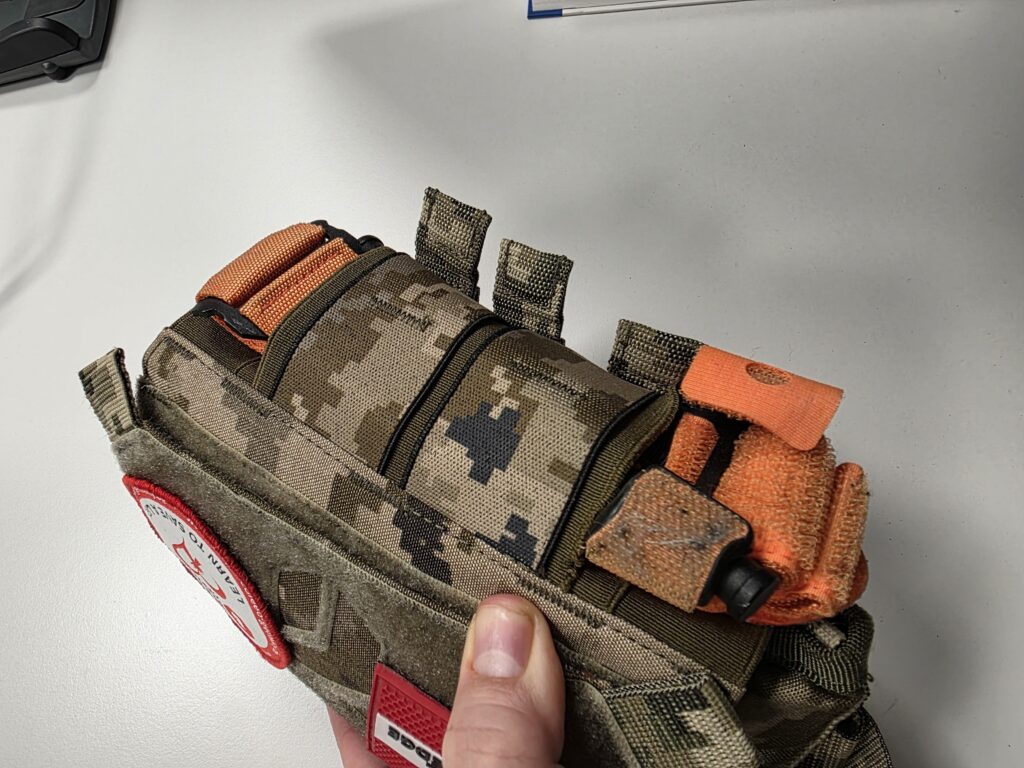
The first thing you realize as a difference to similar pouches is that this one can hold two tourniquets on the outside. Most pouches have some sort of loops to hold extra gear on the outside of the big elastic loop but the TQ Dnipro model is the only one I know which can hold not one but two tourniquets. This makes sense in multiple ways. Once, one tourniquet often is not enough. Either the patient has several wounds that need treatment or a limb is so strong that you need a second TQ to effectively stop blood flow. That’s part of most trainings that mention tourniquets but still most kits have only a single TQ.
The other reason is that a tourniquet loop can not be built ambidextrous, you can always only grab it from one side while the fastening loop is in the way on the other side. With the PM27 you can place the tourniquets in a way that you can reach one from the left and the other from the right.
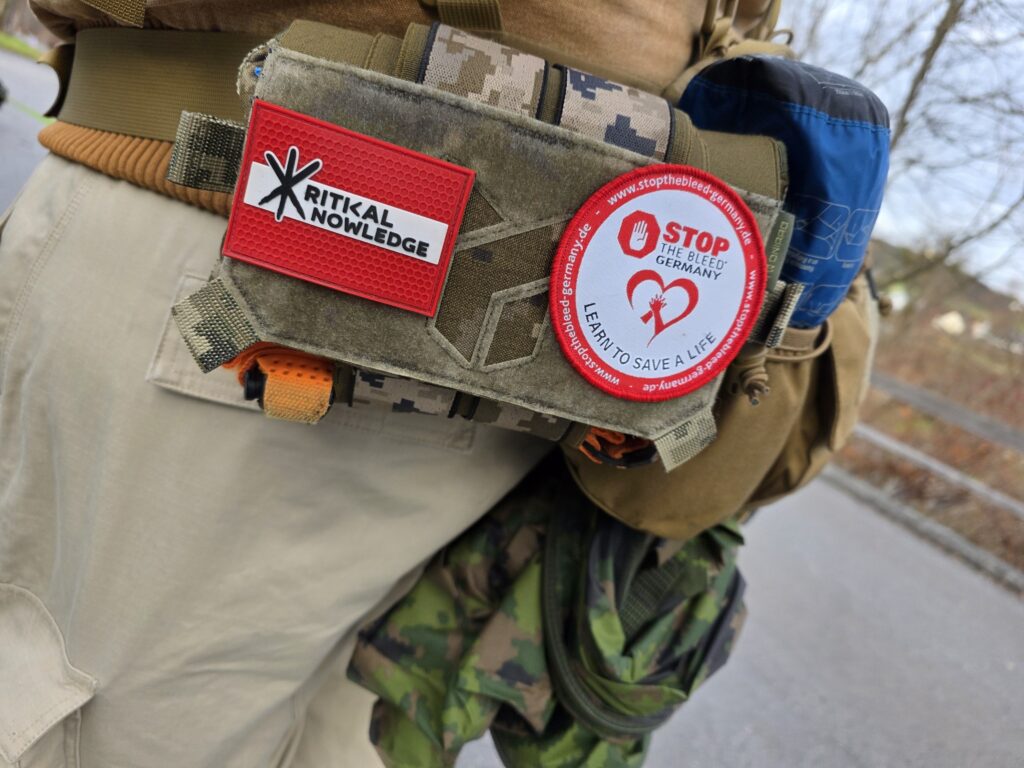
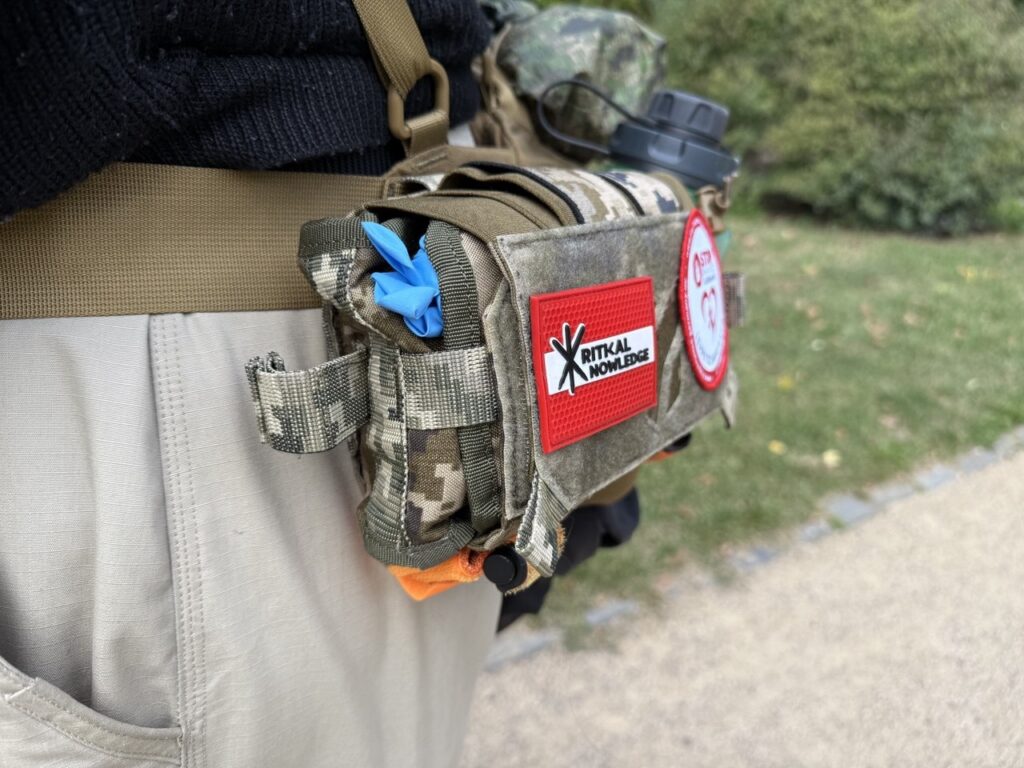
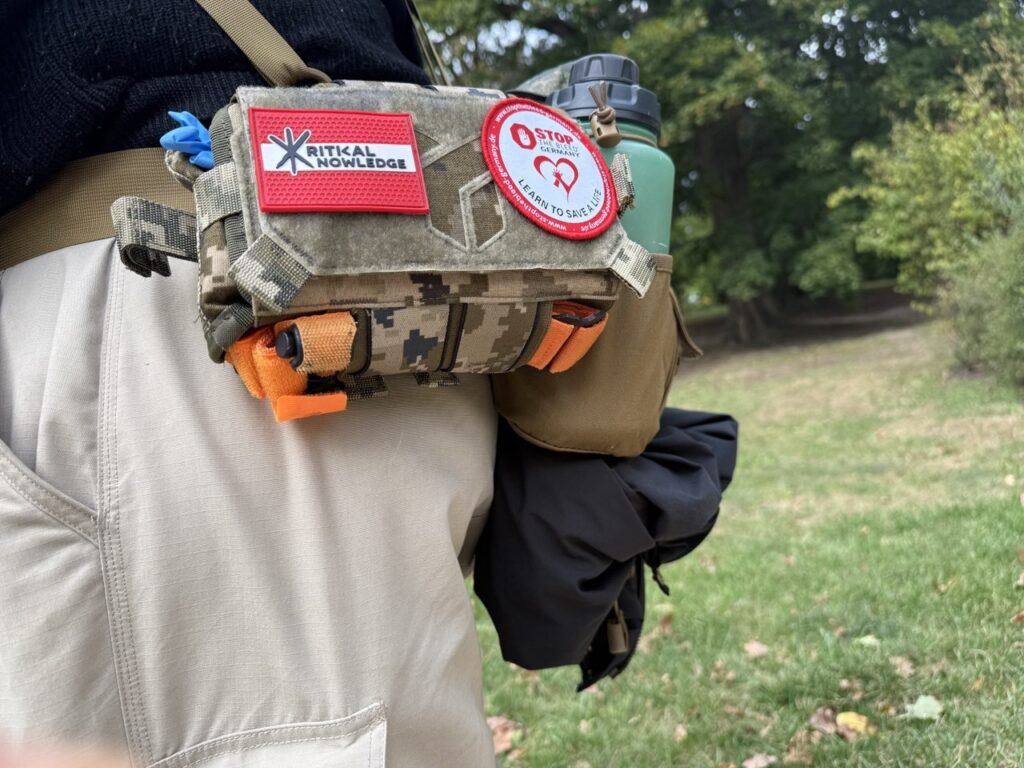
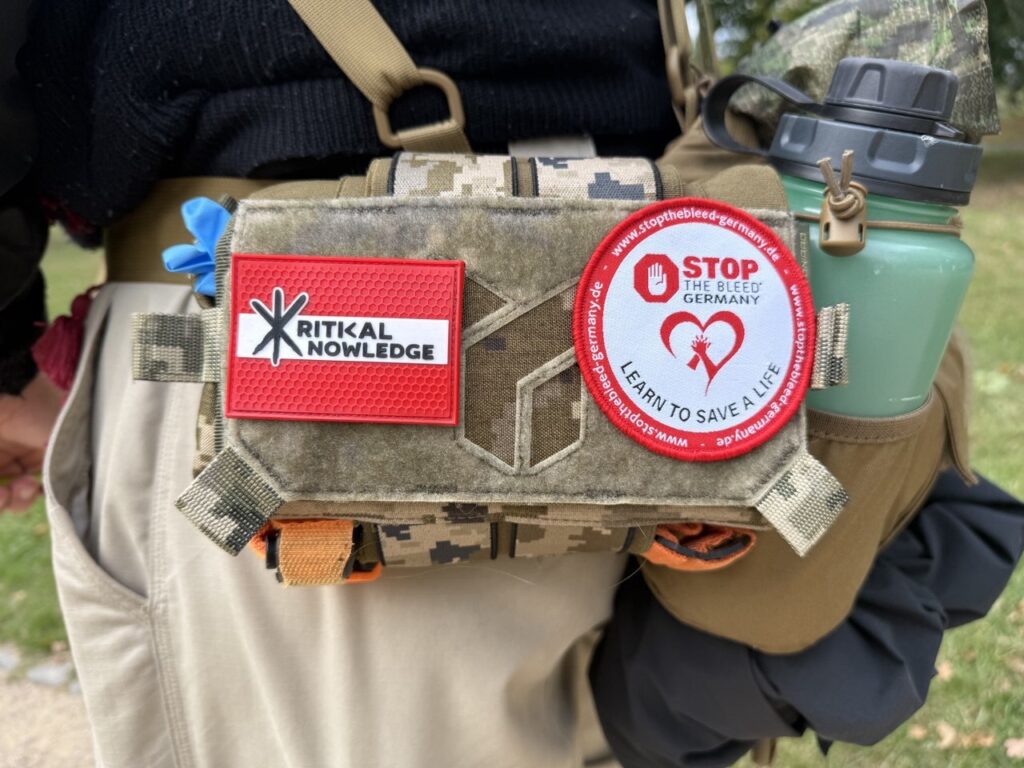
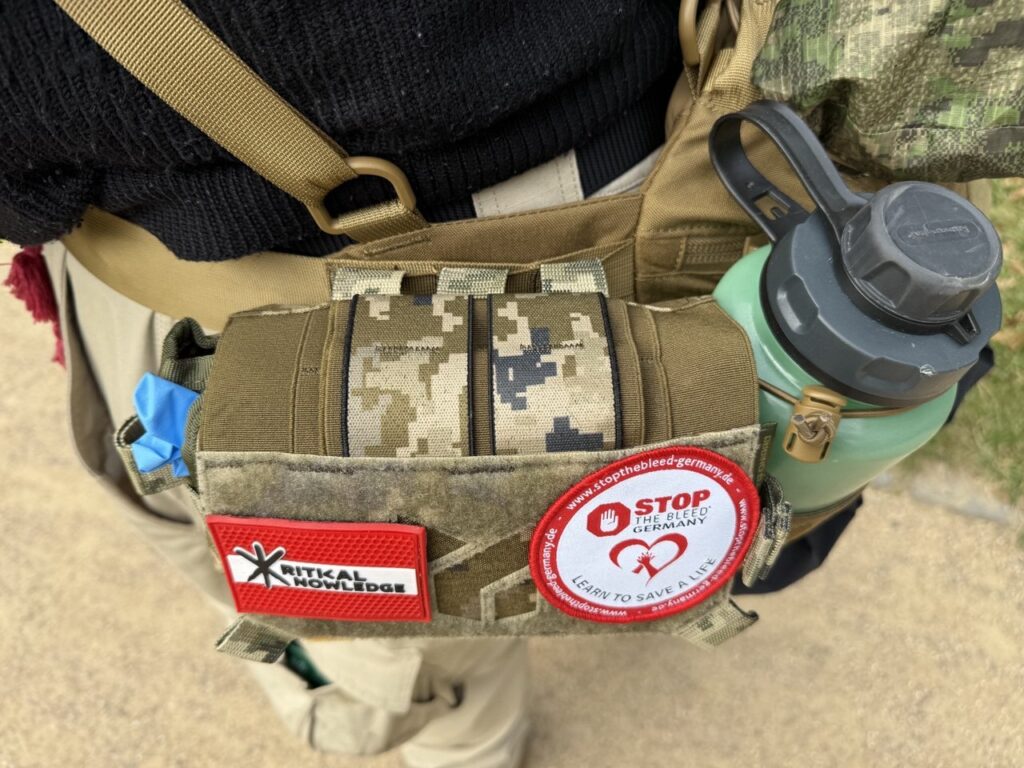
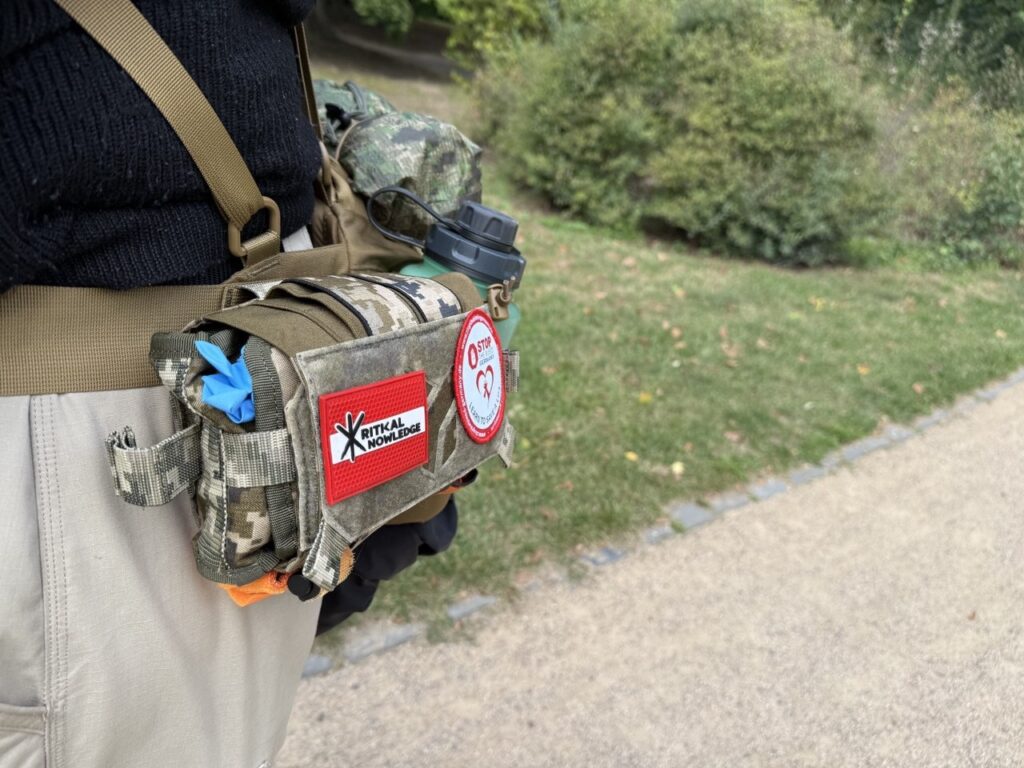
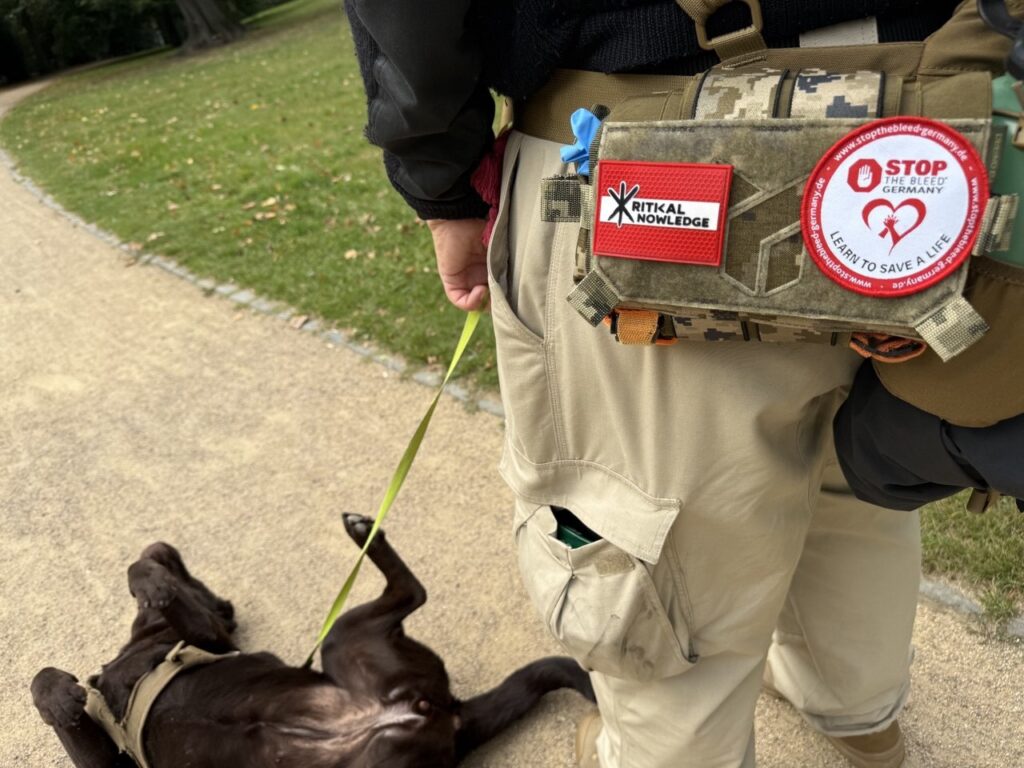
Another difference are the grab handles with which you pull the pouch from the loop. I have seen different designs but TQ Dnipro went for two pieces of heavy webbing. When wearing the pouch the webbing will be moved and eventually bend away in different angles. It might look a bit messier than standard handles, but it actually makes sense. When you reach for it, it’s way more likely that your hand will find at least one of the pieces of webbing. And every single piece is strong enough to pull the pouch out of the loop.
Not only the pouch, but also the holding loop is better designed
The next change is the loop itself. On other models I’ve seen more or less tight elastic loops that might wear out sooner or later. Also, you need to accommodate the contents of the pouch to the width of the loop but not so much to the pouch it holds. Differently with the TQ Dnipro variant where you can open and close the loop with a huge field of hook and loop. I know, all hook and loop / Velcro will eventually wear out but this field is so big that I really doubt that this will happen soon. So you can just adjust the loop to the filling level of the pouch and thus always keep the right retention level.
A small patch of hook and loop at the back of the inner pouch will add a little bit extra retention but will not keep you from pulling the pouch out in an emergency. It will also help with realigning the pouch when putting it back when you’re done.
The inside of the PM27 first aid kit
All first aid kits pouches that use a similar system have a single pouch on the inside. Most of them use a zipper and a few elastic loops on the inside. Even with a quick release system for the zipper it might be cumbersome to open in stressful and adrenaline loaded situations – and that’s exactly what this kind of pouches are built for.
The TQ Dnipro variant comes with hook and loop closing. This might have the downside that the contents is not as well protected than in a zipper closed pouch but modern first aid equipment comes in tough packages so this should not be an issue. But it has the big advantage that you just tear on any part of the pouch and it immediately opens. Also, both zippers and hook and loop can fail in the field, but the big elastic loop will always keep it together.
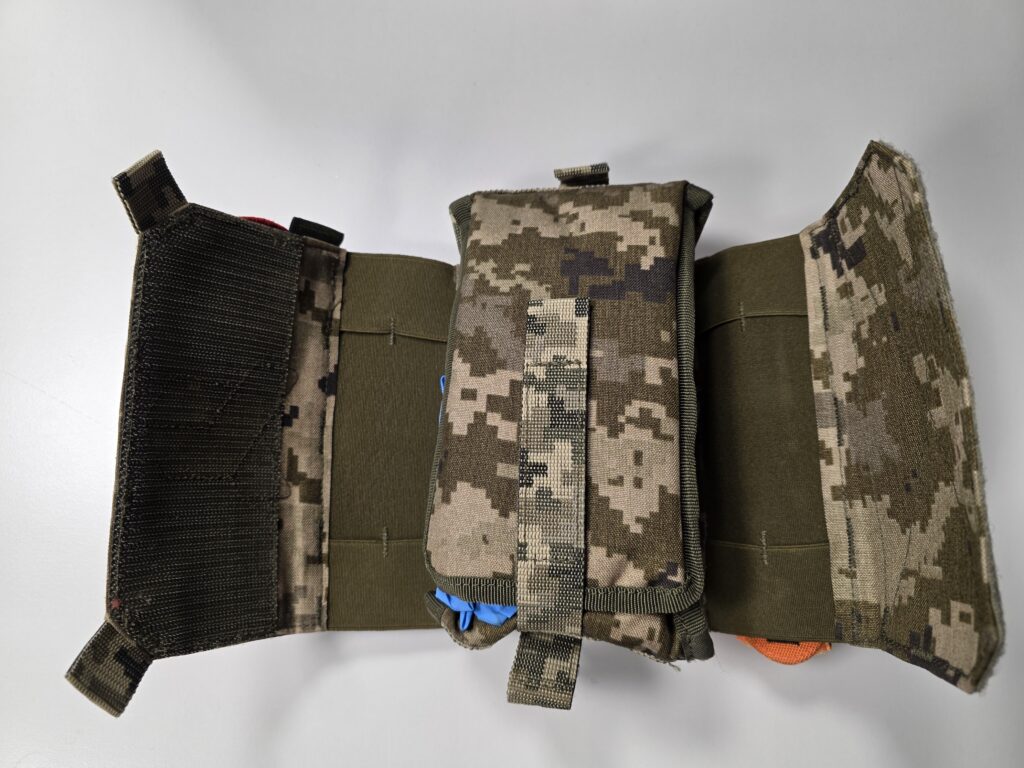
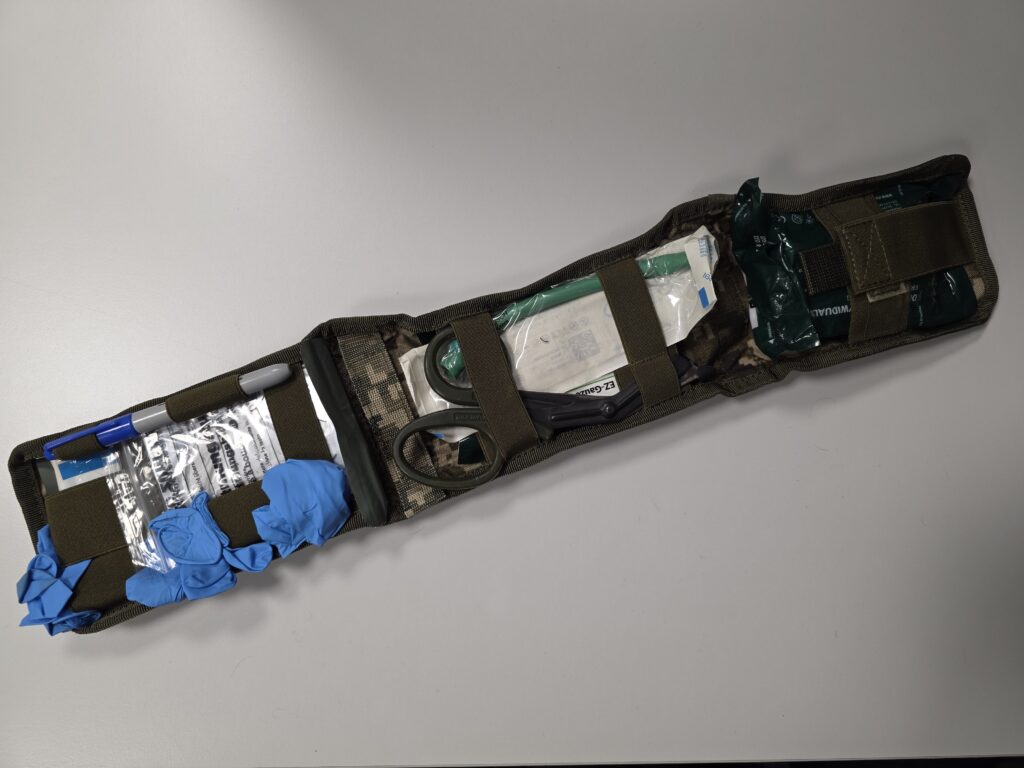
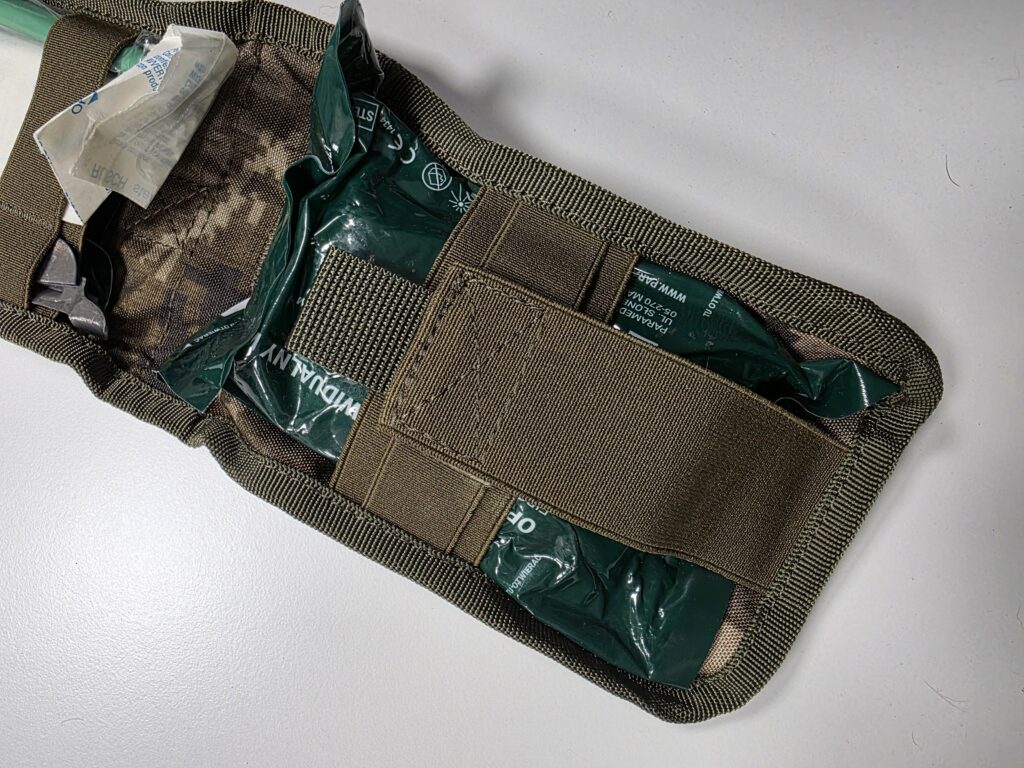
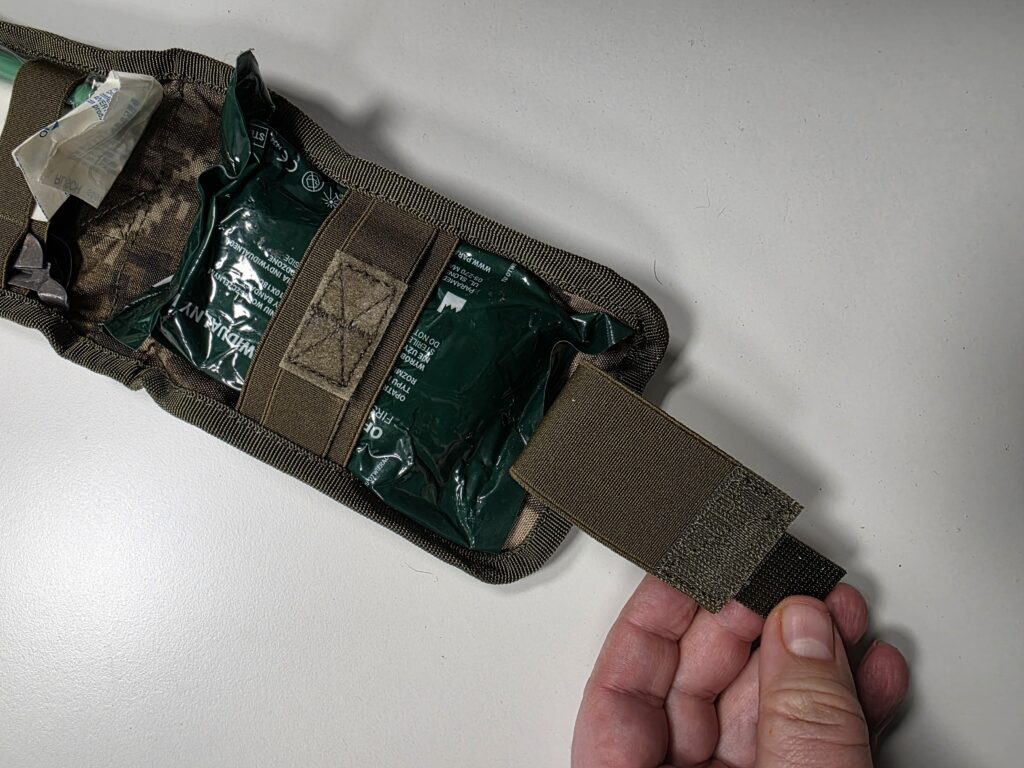
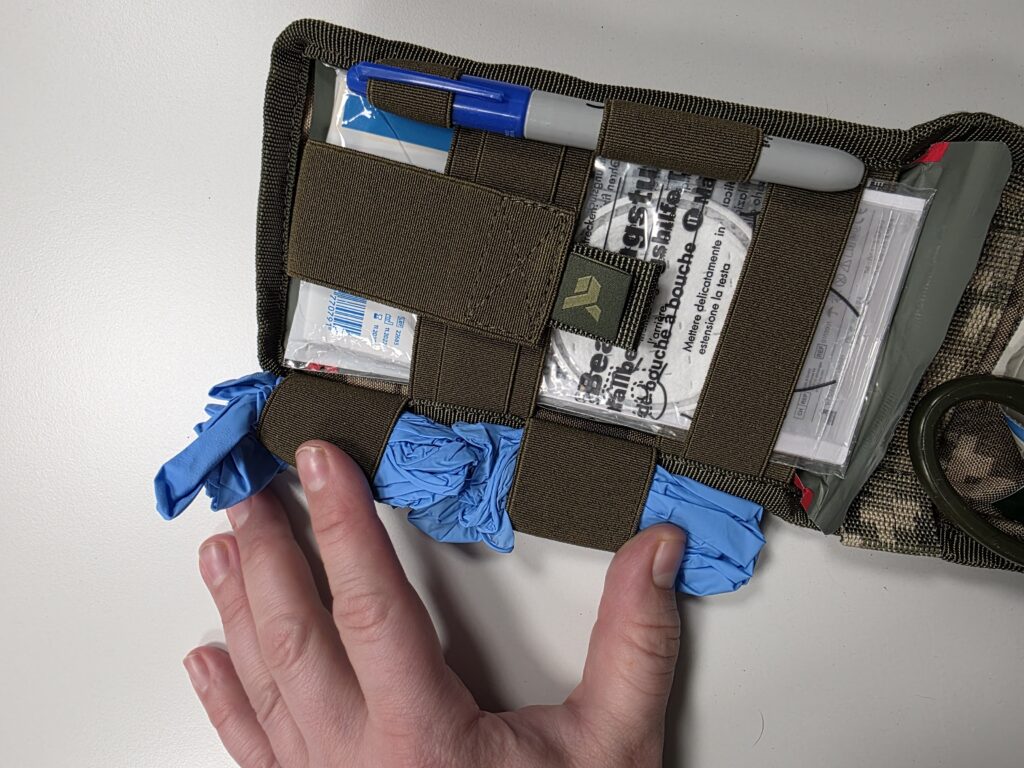
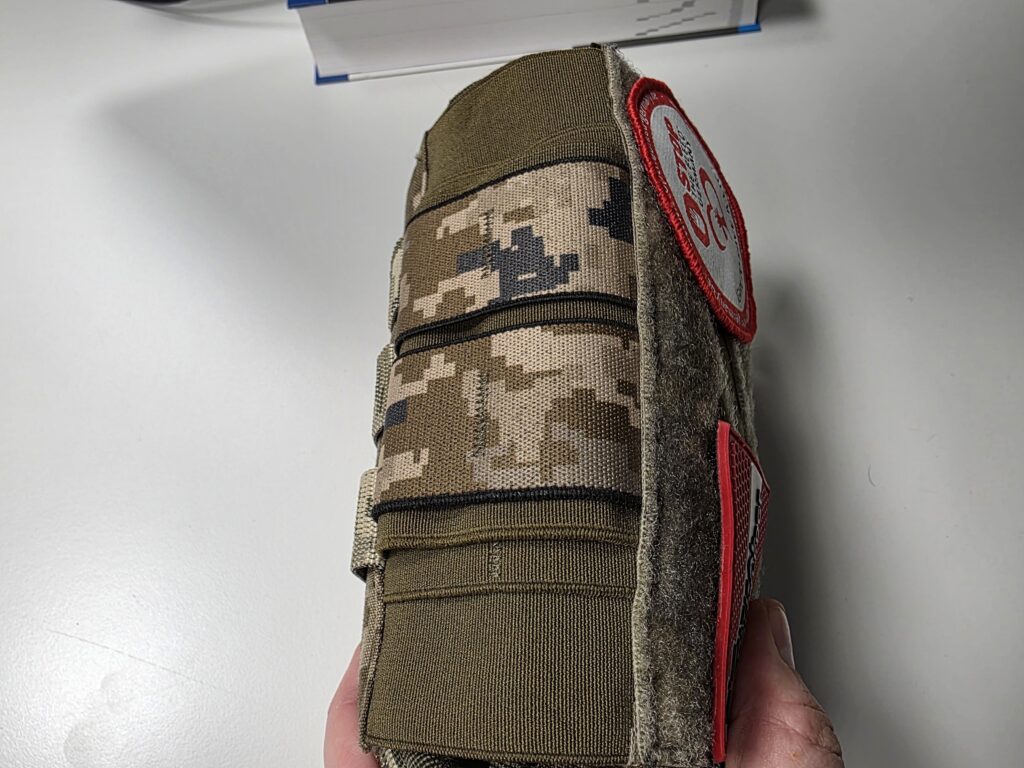
The inner elastic loops in the PM27 are very well thought out. They are not just a few big loops where you stuff anything more or less ok in it. There are bigger loops that make something like a “cage” by forming a “T” like structure. And there are more specialized, smaller loops that hold gloves. It’s a big advantage to have a fixed place for your gloves so you will always know where to reach for them. The place is also very prominent so you see them immediately when opening the pouch. This means you don’t have to search for them and become tempted to skip them.
How I use it
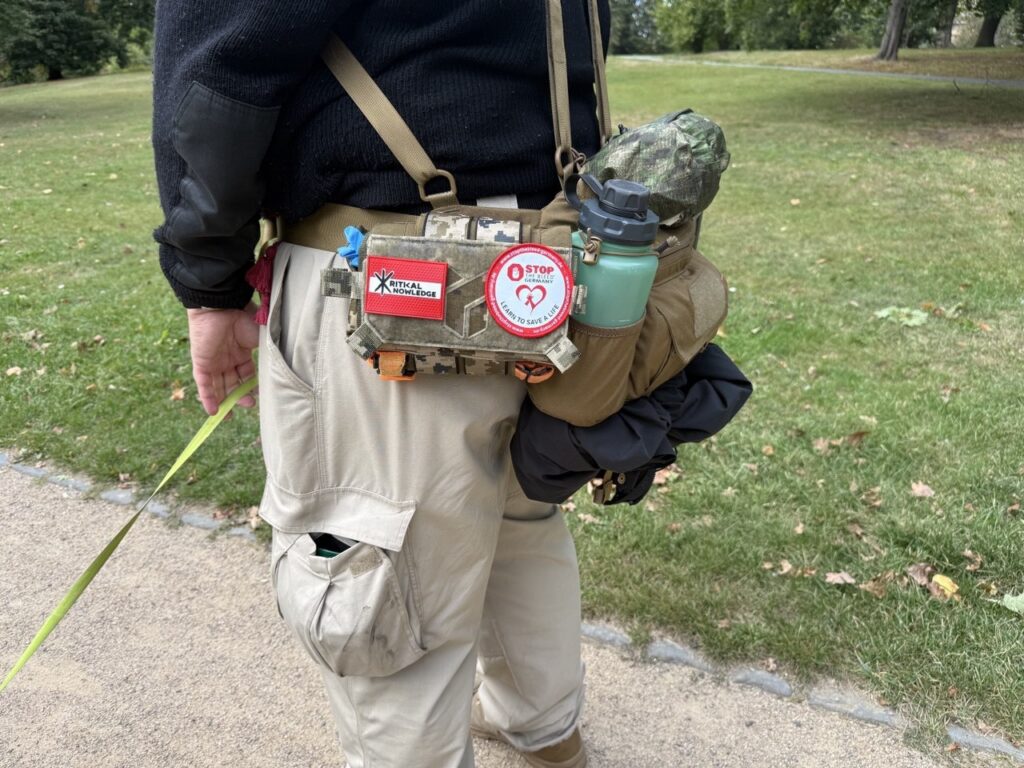
I don’t usually wear a combat belt or battle belt. Neither do I use a plate carrier in my daily life. So I can not use the pouch like it was primarily designed to. It’s versatility helps in other situations, though. I placed my pouch with its loops on the wings of a small bag so that it’s on my rear left side. I can reach it easily with my left arm. And I added a Tourniquet which I can reach with my left arm, too. I know, I lose the ambidextrous usage this way but it just fits better in the way I use my gear.
Currently the pouch holds my second tier of first aid equipment. Life saving stuff but almost nothing else. So I might be back in the position where I have a medic kit of significant size but can’t help in more common but harmless accidents. How often did I hear: “You’re carrying all this stuff but you don’t have a simple band aid with you?” Ok, in the meantime I added band aids because they take up close to no space and really help in many situations. So whenever I’m out and about for a longer time or on roadtrips, business trips and holidays I carry a bigger medic kit like the TQ Dnipro PM24. The PM27 is perfect for day trips, instead. I used it a lot when going on hikes with our dog or when doing day trips to cities.
What I carry in the TQ Dnipro PM27
Here’s a list of items I carry in this awesome pouch.
- Emergency Shears
- Emergency “Isreali” Bandage
- Chest Seals
- Compressed gauze
- Space blanket
- Tourniquet (in the loops on the outside)
- Nasopharyngeal tube
- Bandaids
- Face shield for CPR
- Gloves
- Sharpie Pen
Alternative uses
What I love about this pouch is its versatility. You can carry it on you battle belt or plate carrier. You can use it like I do now, on hip belt wings. But you can also just remove the pouch from the loop and throw it into a bigger bag to have a very tough and compact first aid kit. Especially this variant, using it without the elastic loop give you a lot of extra opportunities.
It even comes with extra loops so you can choose to either mount the big loop with PALS connectors on any MOLLE compatible gear. Or use the extra loops to mount it on a regular belt.
Of course you can always just connect the PALS to a bagpack and have a very useful rip aways first aid kit with you.
An updated version is available soon
At Enforce Tac 2026 I was happy to see an updated version of this great pouch. I do not know yet, if it’s gonna bei the “PM27 2.0” or if it will have a new code.
This one of the things I really like about TQ Dnipro. They don’t just design gear and keep that for the next decade, but they do constant reviews and updates to their gear. In the short time that I know them, they not only released new gear, but upgraded several items I know.
Changes to the new version
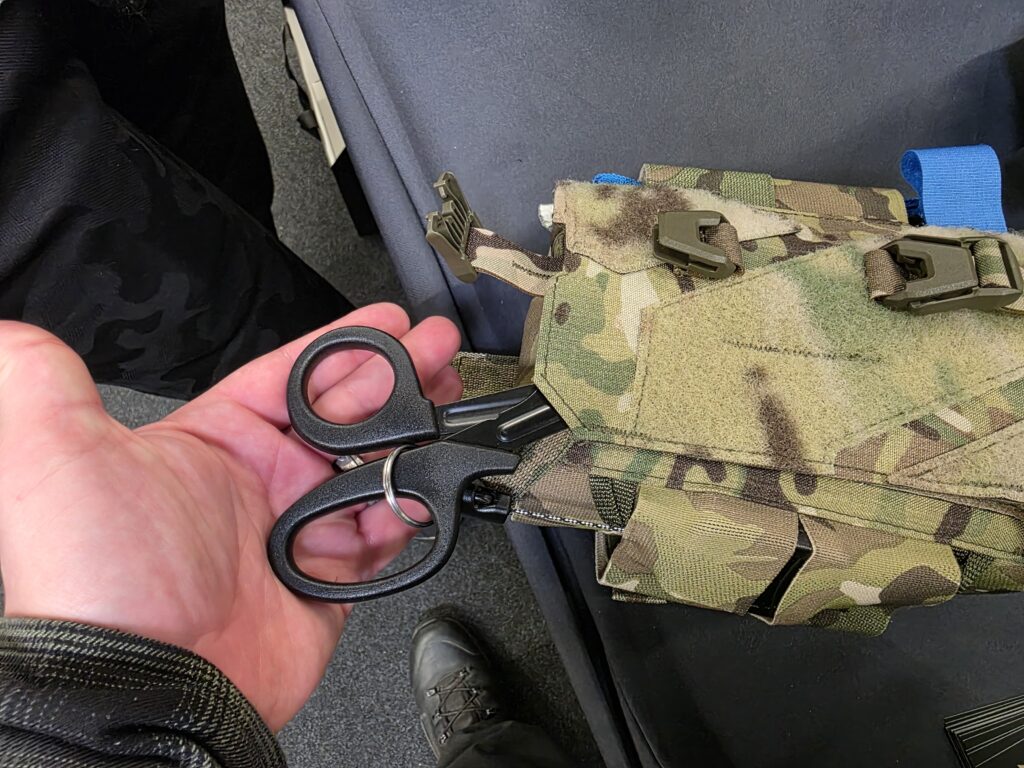
The new one is a bit bulkier, because it has more features. In the lid of the elastic loop that holds the inner pouch, you can please emergency shears. Again, in an ambidextrous way so you can place them how you need them.
There are more loops on the inner pouch so you can add small, long items like thorax decompression needles.
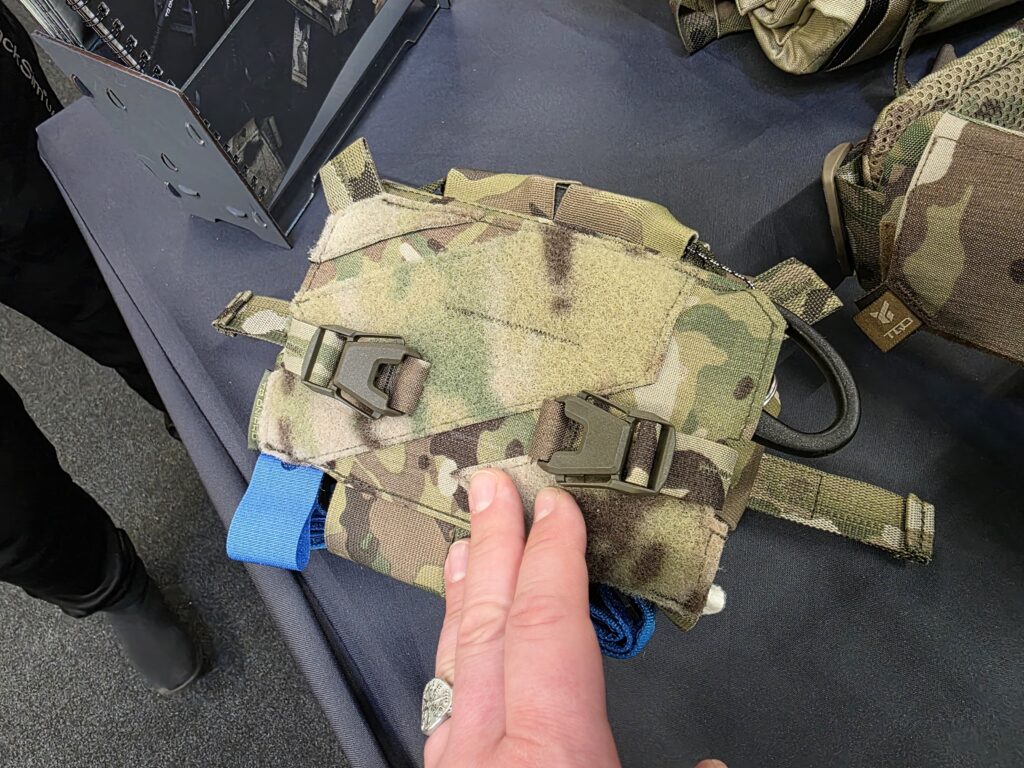
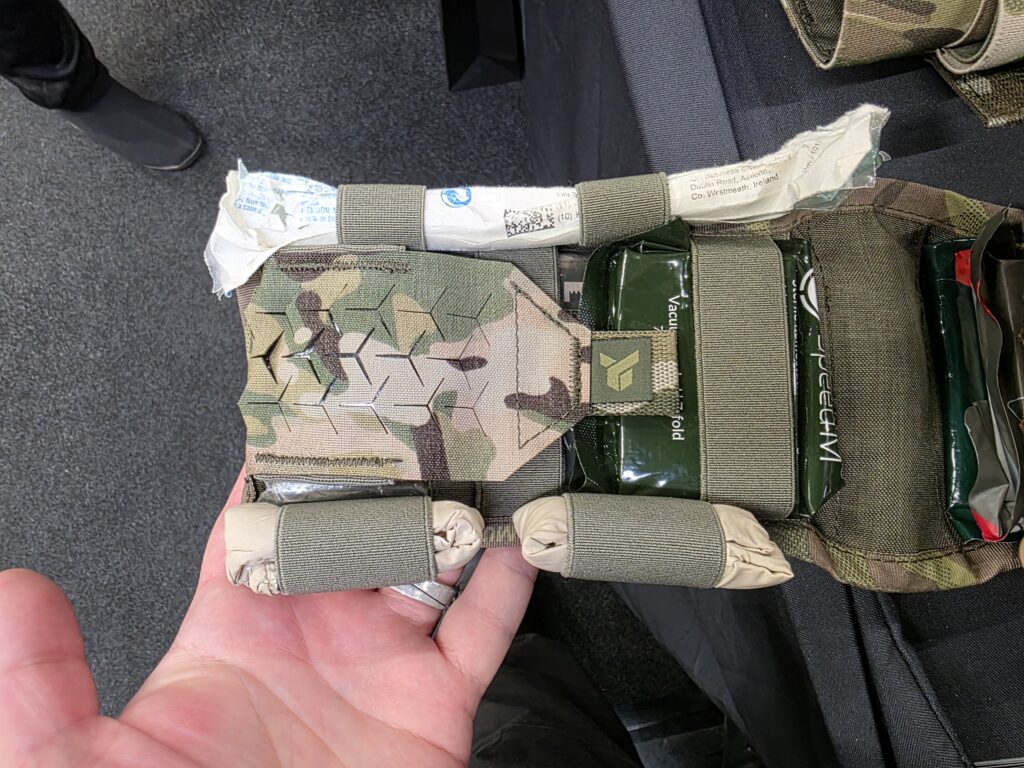
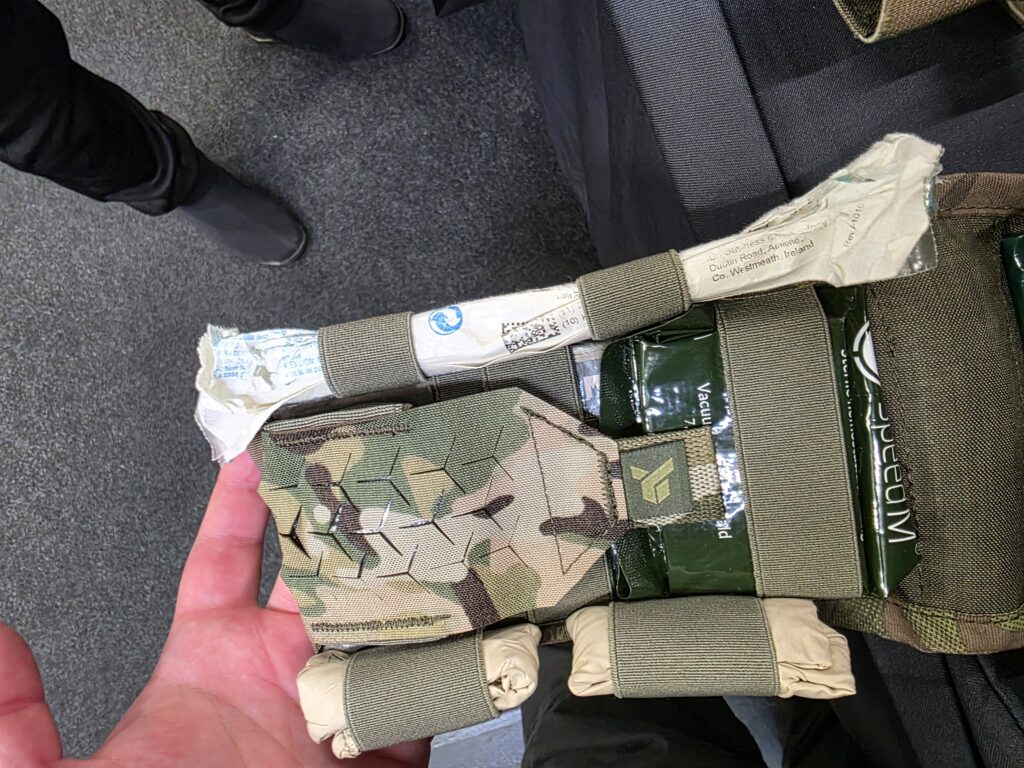
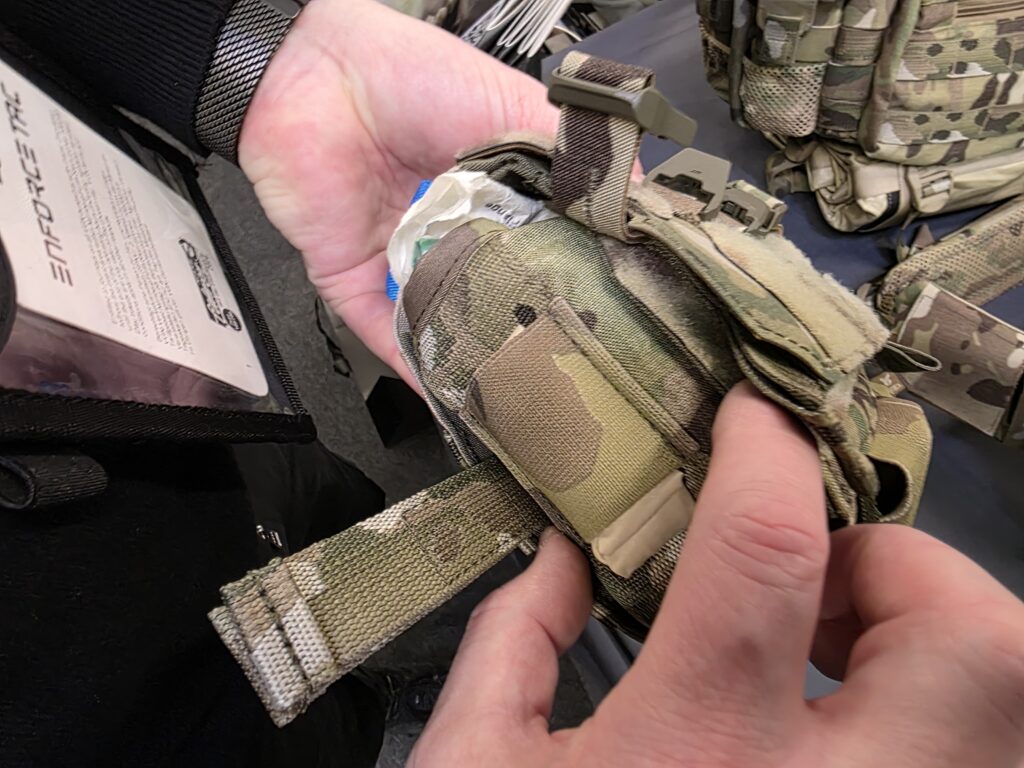
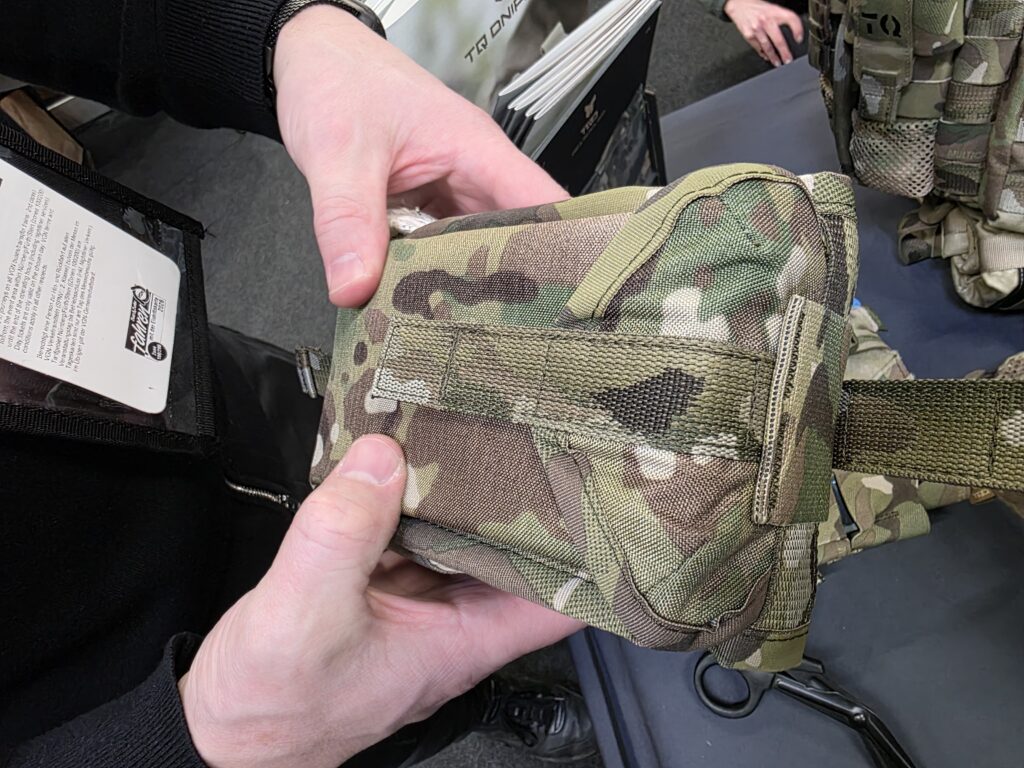
The “T” strap for gear on the inside was replaced with a perforated flap which secures items even better. Also, they have a small loop on the inside e.g. for CPR face shields. Also there are small pockets on the outside, for gloves.